
April Fools' jokes fade away quickly each year, but scammers show no signs of stopping.
Springtime marks a peak period for cyber threats. Not because employees slip up, but because busy schedules and distractions let clever scams sneak by unnoticed.
Here are three current scams targeting savvy, hardworking professionals just like your team.
As you review these, ponder this: Would my entire team pause and detect these traps before it's too late?
Scam #1: The Toll or Parking Fee Text Messages
Imagine an employee receives a text:
"You have an outstanding toll charge of $6.99. Pay within 12 hours to avoid penalties."
The message references a genuine toll service like E-ZPass or SunPass matching their location. The modest amount doesn't raise suspicion. Caught between meetings, they click the link and settle the fee—only it's a trap.
In 2024 alone, the FBI logged over 60,000 reports of fake toll texts, with attacks skyrocketing by 900% in 2025. Cybercriminals set up more than 60,000 fraudulent domains posing as official toll sites—proof of how lucrative this scam has become. Some victims even live in states without toll roads.
It works because a small fee feels harmless, and recent toll or parking use makes the message believable.
The best defense: Authentic toll agencies never demand instant payment via text links. Train your team to bypass texts, instead accessing official websites or apps directly. Never reply to such texts—not even with "STOP"—to avoid confirming an active number and inviting further attacks.
Always prioritize secure processes over tempting convenience.
Scam #2: The "Your File Is Ready" Email
This scam blends seamlessly into daily workflow.
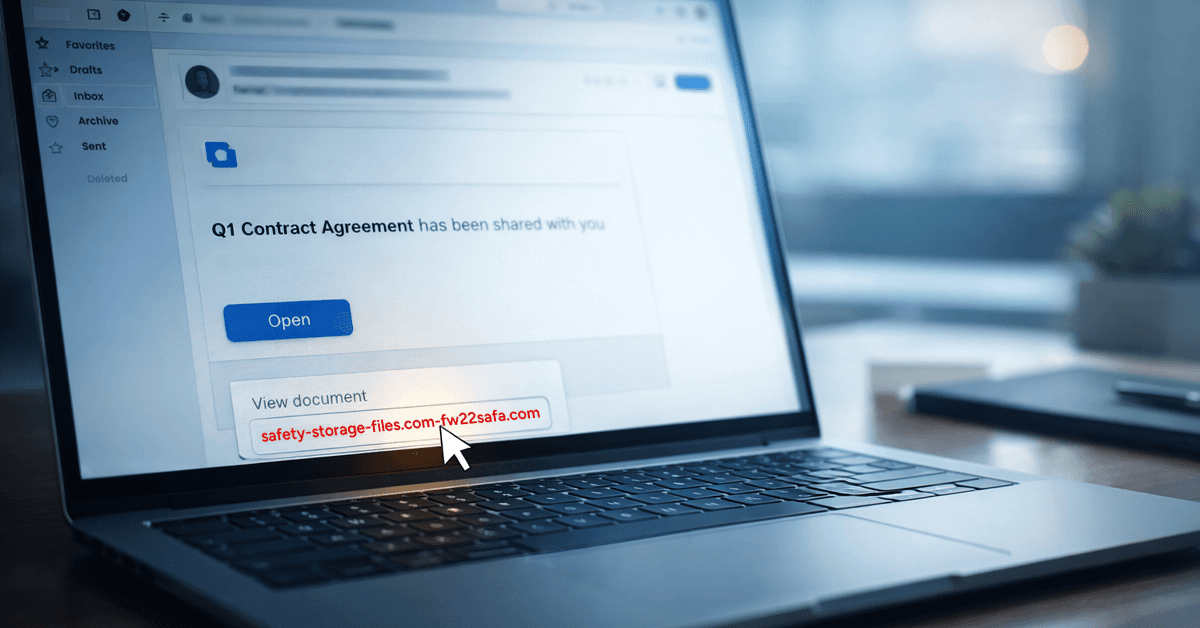
An employee gets an email saying a document was shared—a contract in DocuSign, a spreadsheet on OneDrive, or a Google Drive file.
The sender appears legitimate and formatting matches usual notifications.
They click the link, log in, and unknowingly hand over credentials. Now attackers can lurk inside your company's cloud environment.
Such phishing attempts exploiting trusted platforms surged 67% in 2025, with Google Slides phishing rising over 200% in just six months, according to KnowBe4 Threat Labs.
Employees are seven times likelier to click malicious links from OneDrive or SharePoint as these emails imitate authentic notifications perfectly.
Even more dangerous, attackers now use compromised accounts to send these notifications from official servers, bypassing spam filters because the emails appear genuine.
How to stop this: Train employees not to click unexpected links. Instead, log in directly via the platform's site to verify file shares. IT can swiftly reduce risks by restricting external sharing and enabling alerts for unusual logins—set up in under 15 minutes.
Simple habits create powerful protection.
Scam #3: The Perfectly Written Phishing Email
Gone are the days when phishing emails were riddled with errors and weird formatting.
A 2025 study found AI-crafted phishing emails had a 54% click rate—more than four times higher than human-crafted ones.
These sophisticated messages reference real companies, job titles, and workflows scraped from LinkedIn and websites, making them highly convincing.
Targeted campaigns send believable requests to HR, payroll, and finance teams, like fake employee verifications or vendor payment changes. In one test, 72% of recipients fell for vendor impersonation emails—90% more than other phishing types.
Protection strategy: Verify sensitive requests involving credentials or payments through a second channel—a call, chat, or face-to-face. Always hover over sender addresses to confirm domains. Treat any sense of urgency as a red flag.
True cybersecurity empowers caution without causing panic.
Key Takeaway
These scams rely on trust, urgency, and the assumption that "this will only take a moment."
The real vulnerability is not careless employees—it's processes that expect flawless decisions under pressure.
A single rushed click isn't a people failure, it's a process gap.
And effective processes are fully attainable.
How We Can Support You
Most business owners don't want to add extra projects or become cybersecurity trainers.
They simply want to ensure their operations remain secure and unnoticed by attackers.
If you're worried about your team's exposure—or know someone who should be—let's have a straightforward conversation.
Book a discovery call to discuss:
The specific threats businesses face today
How common work routines expose risks
Practical steps to reduce risks without slowing productivity
No scare tactics. No pressure. Just clear, actionable insight.
Click here or give us a call at 435-313-8132 to schedule your free 10-Minute Conversation.
Feel free to share this with colleagues who could benefit from this knowledge. Sometimes awareness is all it takes to turn a "near miss" into a "blocked threat."