
January is the perfect time to tackle all those neglected tasks, from scheduling doctor and dentist appointments to finally investigating that strange noise in your car.
When it comes to your business technology, preventive maintenance might seem tedious, but it's nothing compared to the catastrophic consequences of ignoring it.
So, here's a crucial question:
When was the last time your business technology underwent a thorough, professional health evaluation?
Not just fixing minor glitches like a printer issue, but a comprehensive system check-up.
Remember, operational doesn't always mean healthy.
Beware the "I'm Fine" Illusion
Just as people skip health checkups when they feel fine, many businesses avoid tech audits because everything seems to be "working":
"Systems are running smoothly."
"We're too busy to pause."
"We'll fix issues if they actually appear."
However, tech issues often remain hidden until they cause emergencies.
Like high blood pressure or a cavity that cause no pain but lead to serious harm, your technology can harbor risks beneath the surface.
Common culprits behind tech failures include:
Known vulnerabilities that were overlooked.
Outdated equipment that seemed fine—until it suddenly failed.
Backup systems that existed but didn't actually work when tested.
Excessive or outdated user access permissions.
Compliance gaps that went unnoticed.
Your systems might function daily yet be just one incident away from disaster.
What a True Tech Health Check Entails
A professional technology assessment scrutinizes your business's infrastructure like a doctor examines a patient—systematically identifying hidden problems before they escalate.
Key Indicator: Robust Backup and Recovery
Backups are the lifeblood of your tech resilience. Ask yourself:
Are backups completing successfully, not just scheduled?
When was the last time you tested restoring a file?
If a critical server failed tomorrow morning, how quickly could you resume operations?
Many businesses only discover failed backups amidst a crisis—akin to finding out your airbags malfunction during a crash.
Infrastructure Stability: Hardware Health
Hardware doesn't fail abruptly; it deteriorates over time. Unsupported, aging equipment can reduce performance or fail suddenly at the worst moments.
How old are your servers, firewalls, and workstations?
Are any devices beyond manufacturer support, leaving them vulnerable?
Do you have a strategic replacement plan, or wait until failure?
Aging hardware is a leading, often hidden cause of unexpected downtimes.
Access Control: Reviewing Credentials
Who exactly has access to your systems? If your answer is uncertain, it's time for a thorough audit.
Can you generate a current list of system users?
Are former employees or inactive vendors still granted access?
Are shared accounts traceable to individual users?
Unchecked access can quietly create vulnerabilities—not from negligence, but from a lack of regular maintenance.
Preparing for the Worst: Disaster Readiness
Facing worst-case scenarios may be uncomfortable, but a solid plan is essential:
If ransomware struck tomorrow, is there a realistic, tested response plan?
Is your plan documented and accessible?
How long could your business operate without key systems?
Don't rely on hopeful assumptions—effective disaster readiness requires concrete preparation.
Industry Compliance: Specialized Requirements
Your industry might impose specific regulations that define what "healthy" means for your technology.
Healthcare providers must comply with HIPAA, where fines can reach $50,000 per violation.
Businesses handling credit cards face PCI compliance obligations, with serious processing repercussions for failures.
Client contracts increasingly demand stringent security standards.
Generic advice isn't enough—you need expertise tailored to your unique industry demands.
Warning Signs You're Overdue for a Checkup
If you catch yourself saying things like:
"I think our backups are working."
"Our server is old, but still runs."
"We probably have ex-employees still in the system."
"We have a disaster plan... somewhere."
"If [name] left, we'd be in trouble."
"We'd likely fail an audit, but no one's asked yet."
… it's definitely time for a professional assessment.
The High Price of Neglect
Spending a few hours on a tech checkup can save you days, weeks, or even the survival of your entire business.
Consider these risks:
Data loss: Faulty backups plus a server failure can erase vital business records, client data, and financial history—often unrecoverable.
Downtime: Every minute offline drains revenue, delays projects, and strains client relationships.
Compliance fines: HIPAA violations can cost tens of thousands per incident; PCI noncompliance jeopardizes payments; privacy laws continue to tighten.
Ransomware: Recovering from attacks can exceed six figures, including ransom payments, remediation, lost business, and reputational harm.
Investing in prevention may seem dull, but facing recovery costs is humiliating and financially devastating.
Why Professional Tech Assessments Matter
You wouldn't diagnose your own health—so why do it with your technology? Professionals bring:
In-depth knowledge of industry-specific tech standards.
Experience spotting subtle signs of emerging problems.
Fresh perspective that reveals issues normalized by everyday business routines.
That's true risk management and disaster prevention, not just firefighting.
Schedule Your Annual Technology Health Check Today
This January, alongside your personal checkups, prioritize your business technology's health.
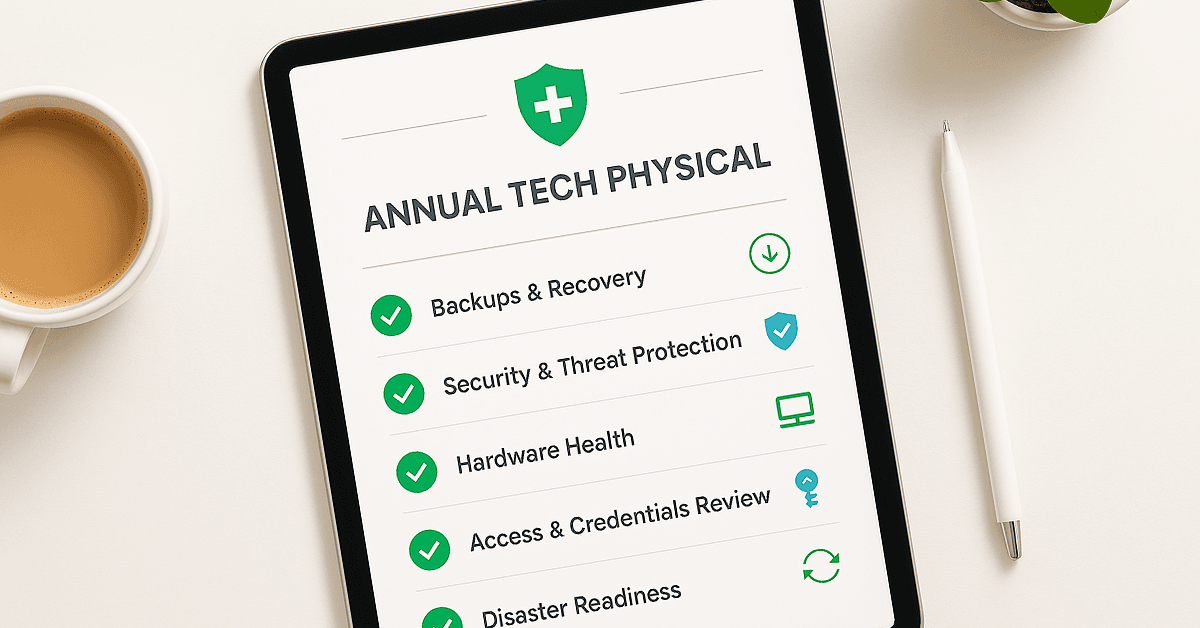
Book an Annual Tech Physical with us.
We'll deliver a clear, jargon-free report detailing your system's strengths, vulnerabilities, and urgent needs—so you can act before emergencies strike.
Click here or give us a call at 435-313-8132 to schedule your 10-Minute Conversation.
The smartest time to resolve technical issues is before they become crises.
That time is now.